
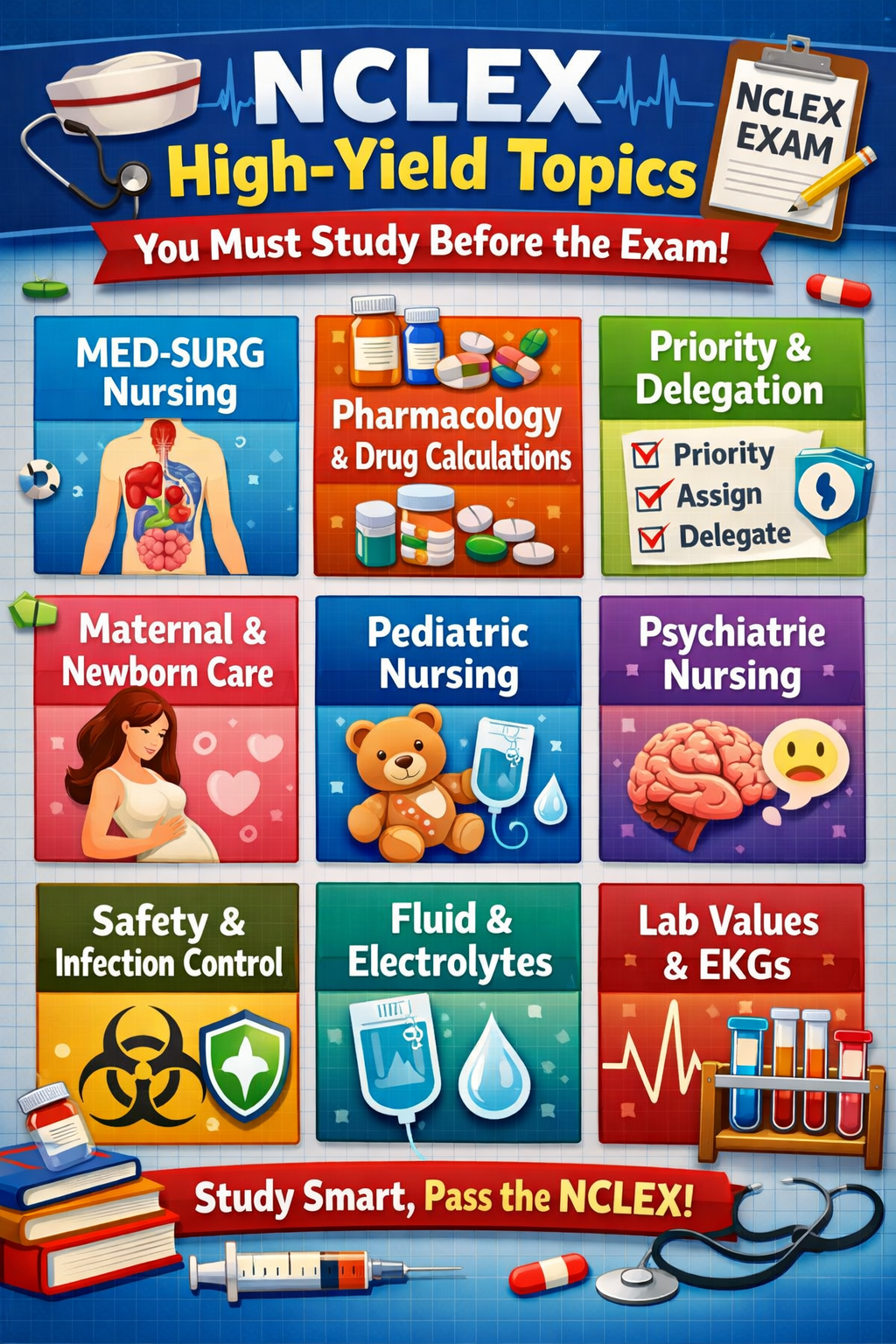
Preparing for the NCLEX exam can feel overwhelming, especially when there is so much nursing content to review. The good news is that not every topic carries the same weight, and focusing on NCLEX high-yield topics can help you study smarter, not harder. By prioritizing the most tested concepts, question types, and decision-making skills, you can build confidence and improve your chances of passing on the first attempt.
If your study time is limited, the best approach is to focus on the topics that show up most often and matter most on exam day. That includes patient safety, prioritization, pharmacology, delegation, infection control, and clinical judgment. These areas are not only common on the test, but they also reflect the real-world thinking expected of a new nurse.
Why High-Yield Topics Matter
The NCLEX is designed to test whether you can make safe, effective nursing decisions. That means memorizing every detail from nursing school is not as helpful as understanding the concepts that appear repeatedly in exam questions. High-yield topics give you a stronger return on your study time because they connect directly to the way the exam is built.
Focusing on the most important content also reduces anxiety. When you know which areas matter most, it becomes easier to build a realistic study plan and track your progress. Instead of trying to review everything at once, you can move through the material in a structured and strategic way.
Core Topics to Study
Some of the most important high-yield NCLEX content includes safety, infection control, prioritization, delegation, health promotion, and basic care management. These topics often appear in scenario-based questions that require you to choose the safest action, identify the most urgent patient, or decide which task can be delegated.
Prioritization is especially important because many NCLEX exam questions ask you to determine which patient needs attention first. A strong grasp of airway, breathing, circulation, and acute changes in condition will help you answer these questions more confidently. Delegation is also critical, since you need to know what can be assigned to an LPN or unlicensed assistive personnel versus what must stay with the RN.
Pharmacology Focus Areas
A strong NCLEX pharmacology review should concentrate on drug classifications, major side effects, antidotes, and priority nursing interventions. You do not need to memorize every medication ever created, but you should know the most frequently tested drug families and the nursing responsibilities tied to them.
Some common pharmacology areas to study include antihypertensives, insulin, anticoagulants, antibiotics, pain medications, and cardiac drugs. It is also helpful to review adverse effects, safe administration, and patient teaching. Many NCLEX drug questions are less about recall and more about recognizing a life-threatening reaction or knowing when to hold a medication.
Question Types That Matter Most
The NCLEX includes multiple question formats, and some deserve extra practice. SATA NCLEX questions are one of the most challenging formats because they require careful reading and a clear understanding of the concept. You should also practice prioritization questions, delegation questions, and questions that ask what action the nurse should take first.
Another question type to review is the case-based format used in the Next Gen NCLEX. These questions test your ability to interpret patient data, connect symptoms to possible problems, and make clinical judgments. The more you practice these formats, the faster you will recognize patterns and eliminate wrong answers.
Next Gen NCLEX Skills
The NCLEX Next Gen emphasizes clinical judgment, which means you must be able to notice cues, analyze information, prioritize concerns, and respond appropriately. This shift makes it even more important to understand the reasoning behind every answer, not just the correct letter choice.
To prepare well, practice patient scenarios, review rationales, and ask yourself why one answer is safer than another. Strong clinical judgment comes from repeated exposure to realistic nursing situations. That is why mixed practice questions and case studies should be part of every study plan.
Common Mistakes to Avoid
One of the biggest mistakes students make is spending too much time on low-yield details. It is easy to get stuck memorizing rare diseases or obscure facts, but that often leaves less time for the topics that are more likely to appear. Another common mistake is only reading notes without practicing questions.
Many students also ignore rationales, even though rationales are where the real learning happens. If you miss a question, the explanation tells you exactly what concept you need to strengthen. Review mistakes carefully and turn them into a targeted study list.
Simple Study Map
A smart NCLEX exam study map should organize your time around the most important areas. Start with safety, infection control, prioritization, and delegation, since these topics support many different question types. Then move into pharmacology, pediatric basics, maternal health, mental health, and Med-Surg systems review.
A simple 7-day map might look like this:
- Day 1: Safety and infection control.
- Day 2: Prioritization and delegation.
- Day 3: Pharmacology.
- Day 4: Medical-surgical nursing.
- Day 5: Mental health and therapeutic communication.
- Day 6: Pediatrics and maternal health.
- Day 7: Mixed practice questions and rationales.
If you have more time, expand that into a 30-day plan with repeated review, daily questions, and one full content area per day.
Final Exam Prep Tips
In the final days before the exam, shift your focus from learning new material to strengthening what you already know. Use short review sessions, practice questions, and quick recall drills to keep the information fresh. Avoid last-minute cramming that leaves you feeling scattered and exhausted.
It also helps to review test-taking strategies. Read each question carefully, identify the priority issue, eliminate unsafe answers, and trust the nursing process. When in doubt, choose the answer that protects the patient first.
Conclusion
Studying NCLEX exam high-yield topics is one of the smartest ways to prepare for the exam because it helps you focus on the concepts most likely to improve your score. By combining core content review, question practice, and clinical judgment training, you can build a more effective and less stressful study routine. A focused strategy will always be more valuable than trying to review everything at once.