
Why first-try success matters
Start by acknowledging that the NCLEX can feel stressful, but first-time success is realistic with the right approach. Explain that many students focus too much on memorization and not enough on strategy, question practice, and understanding the exam format. Introduce the promise of the article: a step-by-step path to passing the NCLEX on the first try.
Include the focus keyword early in the introduction. Use phrases like how to pass the NCLEX on your first try, NCLEX study plan, and NCLEX exam prep in a natural way. This helps search engines understand the topic quickly.
2. Understand the NCLEX format
Explain what the NCLEX tests and why understanding the format matters. Readers should know that the exam is designed to measure clinical judgment, safety, prioritization, and decision-making, not just memorization. Briefly mention that question types may include multiple-choice, SATA, ordered response, and case-based items.
This section should include keywords like NCLEX Next Gen tips and NCLEX question strategies. The goal is to make students feel less intimidated by showing them what to expect. A short explanation here builds trust and improves time on page.
3. Build a realistic NCLEX study plan
This section should explain how to create a study schedule based on the amount of time available before the exam. A 30-day plan works well for many readers, but you can also mention 6-week and 8-week approaches. Emphasize consistency over cramming and encourage daily review blocks.
Use phrases such as NCLEX study plan, how to study for the NCLEX, and NCLEX review guide. Break the plan into daily or weekly goals, including content review, practice questions, and self-assessment. This is one of the strongest SEO sections because many users search for study schedules.
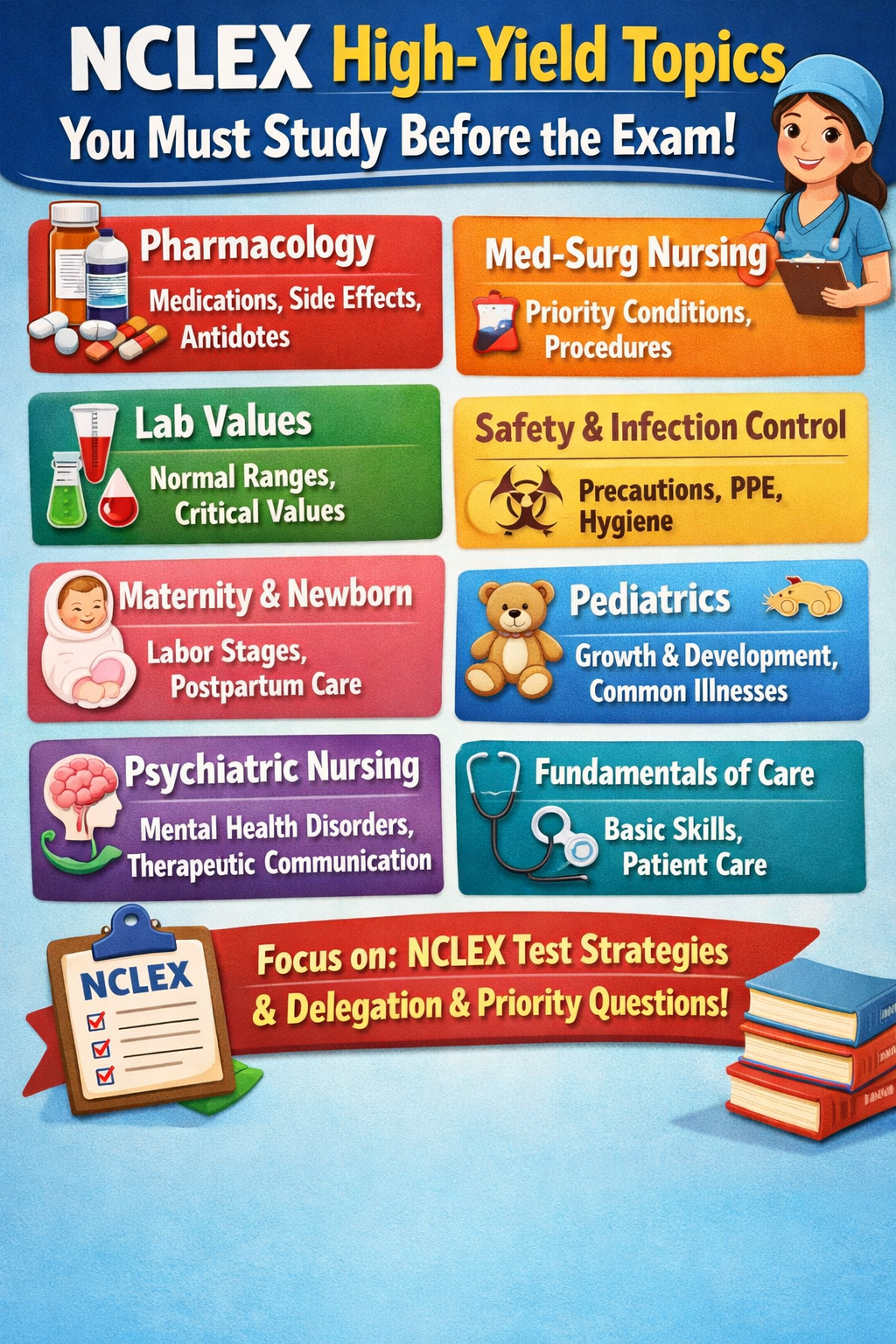
4. Focus on high-yield topics
Explain that not every topic deserves equal attention. Students should prioritize areas that are frequently tested, such as pharmacology, maternal health, pediatric care, mental health, safety, infection control, and prioritization. Mention that focusing on high-yield content improves efficiency and confidence.
This section should naturally use NCLEX high-yield topics, high-yield nursing topics, and NCLEX exam prep. You can also suggest that readers make a “must-know” list and revisit it every day. That makes the advice feel practical and actionable.
5. Practice questions the right way
Many students do questions, but fewer use them strategically. Explain that practice questions should not just be about answering correctly; they should also be used to understand why each answer is right or wrong. Encourage readers to study rationales, identify weak areas, and track patterns in missed questions.
Use strong keyword phrases like NCLEX practice questions, NCLEX question strategies, and NCLEX review guide. This section should make it clear that quantity alone is not enough. Quality review is what improves performance.
6. Master NCLEX test-taking strategies
This section should teach students how to approach difficult questions. Include tips such as ruling out clearly wrong answers, prioritizing safety, identifying the most urgent patient, and avoiding overthinking. Explain that the NCLEX often rewards clinical judgment and careful reading.
Keywords to include here are NCLEX test-taking strategies, pass the NCLEX first try, and how to pass the NCLEX on your first try. This is a highly valuable section because readers often want simple methods they can apply immediately. It also supports strong search visibility for strategy-based queries.
7. Prepare for test day
Explain how sleep, nutrition, timing, and mindset can affect performance. Encourage students to avoid last-minute cramming, gather test-day materials early, and arrive with a calm routine. Mention that a confident and rested mind performs better than a stressed, exhausted one.
Use phrases like NCLEX exam prep and NCLEX study plan here. This section should feel supportive and practical. A simple checklist format can work especially well here.
8. Avoid common mistakes
This part should highlight errors such as cramming too much content, skipping rationales, ignoring weak areas, and not practicing enough questions. You can also mention that some students rely too heavily on passive reading instead of active recall and application. These mistakes are common and relatable, which makes the post more engaging.
Include terms like NCLEX review guide, NCLEX practice questions, and how to study for the NCLEX. Readers should finish this section feeling more aware of what not to do. That helps reinforce the article’s core message.
9. Final encouragement
Close by reminding readers that passing the NCLEX on the first try is about preparation, consistency, and strategy. Reinforce that success comes from focused study, smart review, and confidence in clinical reasoning. End with a motivating statement that encourages action.