
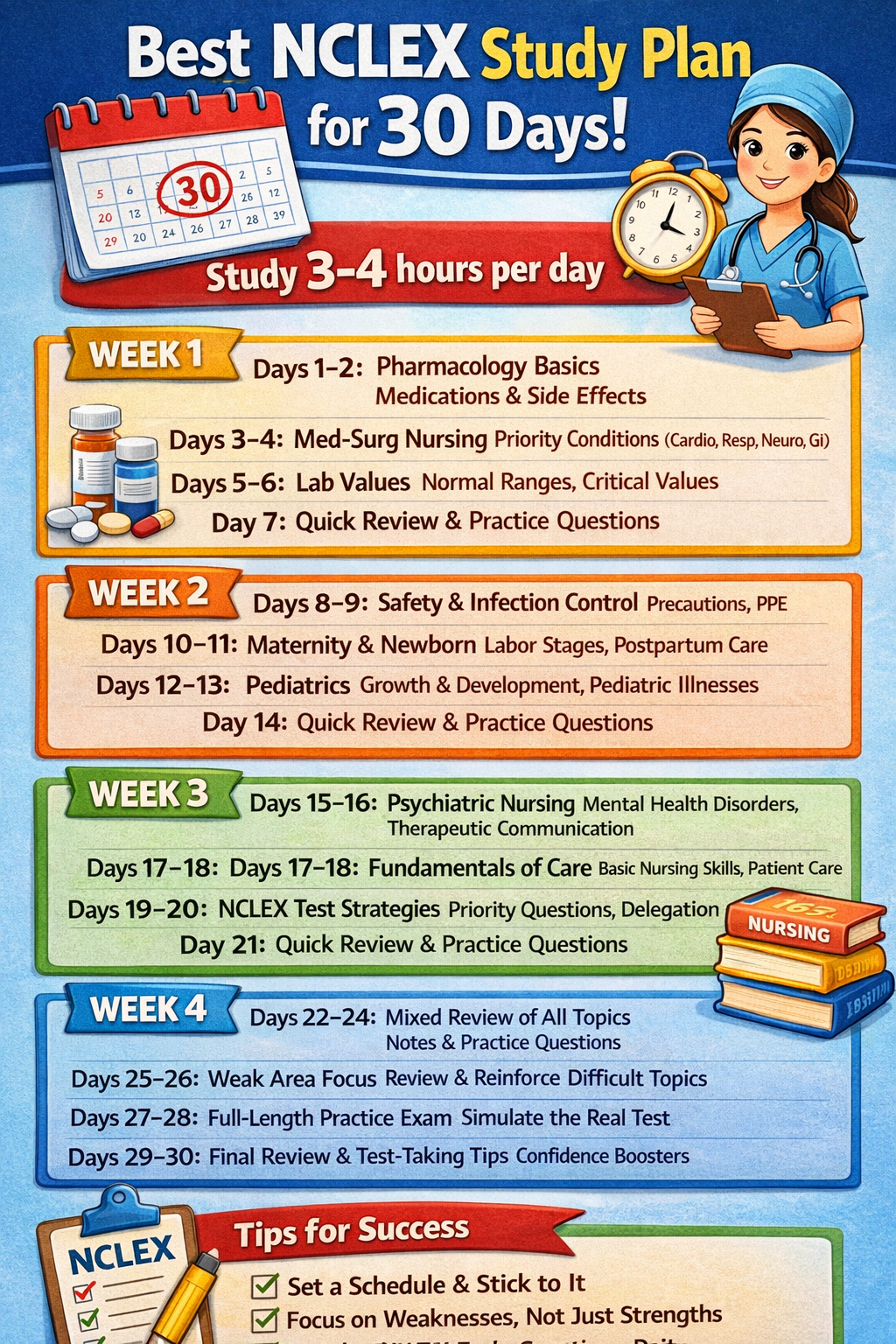
A 30-day NCLEX exam study plan is ideal for nursing students who need a focused, time-efficient roadmap that still covers essential content thoroughly. Instead of cramming randomly, a strong NCLEX study schedule helps you prioritize high-yield topics, practice NCLEX-style questions daily, and improve clinical judgment under timed conditions. This type of plan works especially well for test-takers who want a clear structure, consistent progress, and a realistic path to passing the NCLEX-RN or NCLEX-PN on the first attempt.
Why 30 Days Works
Thirty days gives you enough time to review the most important nursing concepts without losing momentum. It is short enough to stay urgent but long enough to build repetition, confidence, and endurance through practice and review. Many effective 30-day plans use a blend of question-based learning, content reinforcement, spaced repetition, and timed practice to improve retention and exam readiness. For students with limited time, this approach creates a practical balance between coverage and intensity.
Week 1: Build the Base
The first week should focus on foundation topics such as fundamentals, safety and infection control, vital signs, lab values, and core nursing concepts. Start each day with a content review session, then complete a set of NCLEX exam -style questions to connect theory to application. A good goal is to organize your study calendar, identify weak areas, and set a target test date so your 30-day roadmap feels concrete and manageable. By the end of week one, you should understand your baseline strengths and the content areas that need the most attention.
Week 2: Focus on High-Yield Systems
Week two should shift into body systems and commonly tested topics such as pharmacology, cardiovascular, respiratory, endocrine, and renal nursing. Use active recall and spaced repetition to revisit important material instead of reading passively. Pair each study session with practice questions and rationales so you can learn why an answer is correct, not just what the answer is. This is also the right time to start building flashcards, concept maps, and summary notes for quick review later in the month.
Week 3: Strengthen Clinical Judgment
The third week should emphasize clinical judgment, prioritization, delegation, and safe patient care decisions, since these are central to NCLEX success. Increase question volume and include mixed-topic sets so you can practice switching between subjects the way you will on exam day. Add at least one timed practice block that simulates the pressure of the real test environment. If you notice recurring mistakes, make those topics part of your daily review until they feel automatic.
Week 4: Review and Test Readiness
The final week should be dedicated to full review, confidence building, and timed practice exams. This is when you should revisit your weakest topics, retake missed questions, and use short study sessions to reinforce rather than overload. Keep your schedule lighter in the last few days so your brain can rest and absorb what you’ve learned. A final full-length or near-full-length practice test can help you check pacing, stamina, and readiness before test day.
Recommended Daily Content Mix
A strong 30-day NCLEX prep plan should combine several learning formats instead of relying on one method alone. A useful daily mix includes content review, practice questions, rationales, flashcards, and short reflective notes on mistakes. Video lessons can help clarify difficult concepts, while question banks train you to think like the NCLEX exam. This blend supports both memory and application, which is critical for a computer-adaptive exam.
Sample Daily Structure
A balanced study day might include one block for content review, one block for practice questions, and one block for remediation. For example, you could spend the morning reviewing one topic, the afternoon answering 50 to 75 questions, and the evening reviewing rationales and making flashcards. Including short breaks helps prevent burnout and improves focus over the full 30 days. Consistency matters more than extreme study hours, especially when your goal is sustainable progress.
Study Tips for Better Results
To get the most from a 30-day NCLEX exam study schedule, track your scores, weak areas, and question patterns every few days. Focus on understanding rationales instead of memorizing answer keys because the exam is designed to test reasoning and clinical judgment. Use practice exams to simulate real timing and build endurance, since pacing is a major part of test-day performance. Most importantly, study with intention so every day of your plan moves you closer to passing.
Conclusion
The best NCLEX study plan for 30 days is one that is structured, realistic, and focused on high-yield nursing concepts, daily practice questions, and repeated review. A smart plan turns the final month before your exam into a clear roadmap instead of a stressful guessing game. By following a weekly progression and mixing content review with question practice, you can build confidence and improve your chances of passing the NCLEX on the first try.