
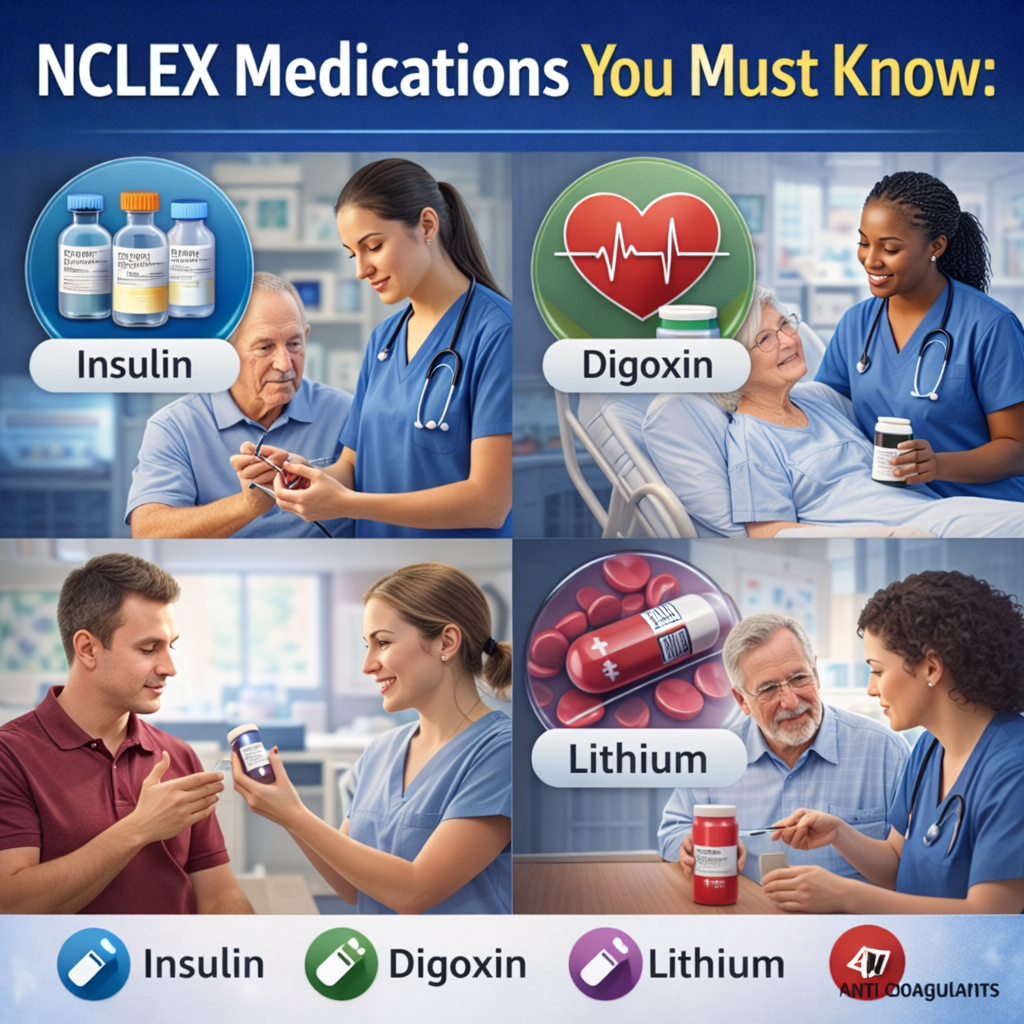
If you are preparing for the NCLEX Exam, few topics are more important than medication safety. Insulin, digoxin, lithium, and anticoagulants are high-yield drugs that appear often in NCLEX Exam questions because they require careful monitoring, patient teaching, and quick recognition of toxicity or adverse effects. Understanding how each medication works, what to watch for, and when to hold a dose can help you answer exam questions with confidence.
Why these medications matter on the NCLEX
The NCLEX does not just test memorization. It tests whether you can keep patients safe. That is why medications with a narrow therapeutic range, serious side effects, or special administration rules show up so often. Insulin can cause hypoglycemia, digoxin can trigger dangerous heart rhythm changes, lithium can become toxic quickly, and anticoagulants can increase bleeding risk.
If you know the warning signs, lab values, and patient teaching points for these medications, you will be better prepared for both direct questions and clinical judgment scenarios.
Insulin: know the types and timing
Insulin is one of the most tested NCLEX Exam medications. You should know the difference between rapid-acting, short-acting, intermediate-acting, and long-acting insulin, along with when each one starts working and when it peaks. A common NCLEX priority is preventing hypoglycemia, especially when meal timing does not match insulin administration.
Key points to remember:
- Rapid-acting insulin is given with meals or right before meals.
- Short-acting insulin can be given before meals.
- Intermediate-acting insulin has a later peak and may be used for basal coverage.
- Long-acting insulin has no true peak and provides steady background control.
For the NCLEX, always think safety first. If a patient’s blood sugar is low, insulin is usually held and the nurse should follow facility protocol.
Digoxin: watch the pulse and toxicity signs
Digoxin is a classic NCLEX Exam medication because it requires careful assessment before administration. The nurse should check the apical pulse before giving the drug, and the medication may be held if the pulse is too low according to the provider’s instructions or facility policy.
You should also know the signs of digoxin toxicity:
- Nausea or vomiting
- Loss of appetite
- Blurred vision or yellow-green halos
- Bradycardia
- Confusion
Low potassium can increase the risk of digoxin toxicity, so electrolyte values matter too. On the exam, questions often ask which finding should be reported first, and the answer is usually a symptom of toxicity or an unsafe pulse rate.
Lithium: monitor levels and hydration
Lithium is another high-yield NCLEX drug because the difference between a therapeutic level and a toxic level can be small. This medication is commonly used for bipolar disorder, and it requires regular blood level monitoring.
Important lithium teaching includes:
- Maintain consistent salt intake.
- Stay hydrated.
- Avoid dehydration, which can increase lithium levels.
- Report signs of toxicity such as tremors, diarrhea, vomiting, confusion, or unsteady gait.
A common NCLEX trick is to connect lithium toxicity with fluid loss. If a patient has vomiting, diarrhea, or poor oral intake, the nurse should think about lithium levels and dehydration risk.
Anticoagulants: prevent bleeding complications
Anticoagulants are tested heavily because they can save lives but also cause serious bleeding. Common examples include heparin, warfarin, and some newer oral anticoagulants. NCLEX exam questions often focus on monitoring, bleeding precautions, and patient education.
Important concepts include:
- Watch for bleeding gums, blood in urine, black stools, or unusual bruising.
- Use bleeding precautions such as a soft toothbrush and electric razor.
- Know the appropriate lab tests for the specific anticoagulant.
- Teach patients to report signs of internal bleeding immediately.
Warfarin teaching is especially important. Patients should understand the need for consistent vitamin K intake and follow-up lab monitoring. Heparin questions may focus on rapid action and bleeding risk.
How to study these medications for NCLEX
The best way to study these medications is to group them by safety issue rather than by drug name only. Ask yourself:
- Does this medication cause hypoglycemia, bleeding, toxicity, or heart rate changes?
- What should the nurse assess before giving it?
- What labs matter?
- What patient teaching is most important?
Making flashcards, practicing NCLEX-style questions, and using comparison charts can help you retain the most important facts faster. Focus on the signs that require immediate action because those are often the correct answers on the exam.
FAQ
Which NCLEX medication is most important to know?
Insulin is one of the most important because it appears often and requires careful timing to prevent hypoglycemia.
What is the most common digoxin NCLEX question?
Many questions ask about checking the apical pulse before administration or recognizing signs of toxicity.
Why is lithium a high-yield medication?
Lithium has a narrow therapeutic range, so dehydration, sodium changes, and toxicity symptoms are commonly tested.
What is the main risk with anticoagulants?
The biggest concern is bleeding, so NCLEX questions often focus on prevention, monitoring, and patient teaching.
How should I study these drugs for the NCLEX?
Study side effects, toxicity signs, lab monitoring, and nursing priorities for each drug.